Link copied to clipboard


You didn't start too broad because you were unfocused. You started too broad because you care deeply, and the problem space is enormous. When you're building in women's health or the baby and family space, the instinct to help as many people as possible is part of what drove you to build in the first place. But when your product tries to serve every woman, in every stage of life, across every health concern or parenting moment, it ends up feeling like it was built for no one in particular. Your users feel that vagueness. It shows up in your copy, your navigation, your onboarding flow. And it quietly chips away at trust before someone even gets to what you actually offer. The fix isn't a better roadmap or a bigger feature set. It's a clearer picture of one user, in one moment.
The problem space you're working in is uniquely sprawling. Health, identity, family, body, work, relationships. It all overlaps, and it all matters. If you come from a health, clinical, or product background, you probably have broad, legitimate expertise across a lot of it. That makes it genuinely hard to draw a line and say "not this, not yet."
But that instinct to include more, to make room for every relevant use case and every possible user, is exactly what gets founders into trouble. Not because the problems aren't real, but because a product that tries to hold all of that complexity at once sends a signal to users that it doesn't quite know who it's for. And users, especially women making decisions about their health or their families, are remarkably good at picking up on that signal.
Women's health and family products carry a higher trust burden than most categories. Your users are making decisions that feel personal, sometimes vulnerable, often high-stakes. When a product feels vague or unfocused, it doesn't just fail to convert. It actively loses trust. Scope vagueness is a trust problem before it's anything else.
Before any design decision gets made, you should be able to complete this sentence: "This product is for [specific user] in [specific life moment], when they need [specific outcome]." That's it. One user, one moment, one need.
Each part of that sentence does real work. The specific user isn't "women aged 25 to 45." It's a first-time mom in the newborn phase who is too exhausted to read anything longer than three sentences. Or a woman in perimenopause who has seen five doctors and still doesn't have answers. The specific life moment isn't "managing their health." It's the 2am feed, the week after a diagnosis, the day they decided to start trying. And the specific outcome isn't "feeling better." It's finding one thing that actually works, fast, without having to think too hard.
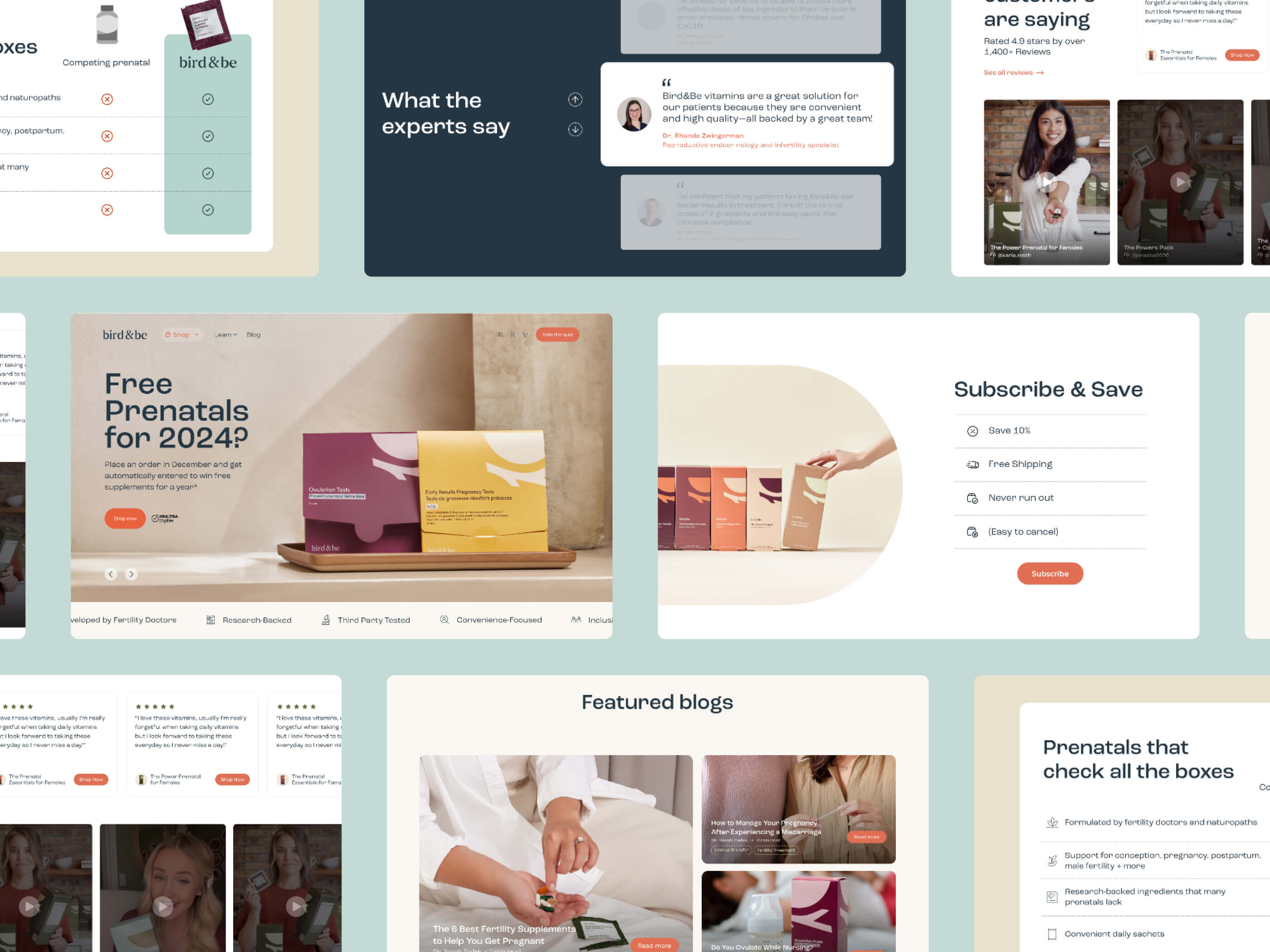
Here's what that looks like in practice:
Founders tend to think of scope as something that gets decided before design begins. You define your user in strategy, lock in your positioning, and then hand it off to design to execute. But that's not actually how it works.
Every design decision you make either reinforces or undermines your scope. Your navigation tells users what this product thinks is important. Your onboarding flow tells them who it was built for. Your feature hierarchy tells them whether you understand their life or just their problem. Even your microcopy, the tiny labels, the button text, the empty states, signals whether this product knows who it's talking to.
Vague scope produces vague design. When you haven't committed to one user in one moment, every design decision becomes a negotiation. Do we include this? Do we surface that? The result is a product that tries to do too much, where nothing feels quite right and nothing feels quite wrong either. It just feels a bit off. And that feeling, that subtle sense that something doesn't fit, is exactly what stops a woman from trusting a product with something that matters to her.
Design is where scope gets tested. Not confirmed. Tested.
So what does that look like in practice? Here's a simple exercise you can do with your team in about 30 minutes.
Start by writing the sentence. "This product is for [specific user] in [specific life moment], when they need [specific outcome]." Don't workshop it. Don't make it perfect. Just write the most honest version you can right now.
Then pressure-test it against your current product. Look at your homepage, your product pages, your top three offerings. Ask yourself honestly: does this reflect the user and moment in your sentence? Or is it trying to serve someone slightly different, or several people at once? If your sentence says first-time moms in the newborn phase but your homepage speaks to all parents of children under five, that's drift. Name it.
Finally, identify where your product is drifting outside the sentence. This isn't about cutting your range or starting over. It's about knowing where the gaps are so you can make intentional decisions about them. Some drift is fine. Unacknowledged drift is what creates that vague, built-for-everyone feeling that stops users from trusting you.
Thirty minutes. One sentence. A much clearer starting point for every design conversation that follows
When a user lands on a product that clearly knows who it's for, they feel it immediately. The copy speaks to them. The experience makes sense for their life. Nothing feels out of place. That's not an accident. It's the result of a founder who did the hard work of getting specific before anything got designed.
Scope clarity isn't just a strategic asset. In women's health and family brands, the bar is higher. Your users are making decisions about their bodies, their pregnancies, their newborns. Vague costs more here. But here's what founders often miss: getting specific isn't what limits your reach. It's what builds it. When you become the go-to brand for one user in one moment, you have somewhere to grow from. When you try to serve everyone from the start, you're memorable to no one.
If you're not sure what your "one user, one moment" actually is, or you've written the sentence but something still feels off, let's talk. Send me a message and we'll figure it out together.